

The Air Force, Air Defense Command and Control System: A Major Leap for Vietnam's Air Defense Warfare
Starting from scratch amid deep skepticism, Viettel High Tech engineers were determined to master the national airspace surveillance system, contributing to modernizing combat operations and safeguarding Vietnam's airspace sovereignty.
Hanoi, November 14, 2016.
It was an ordinary day like any other, but it became a crucial milestone for the country’s defense industry. At that exact moment, the Air Force, Air Defense Command and Control System 1 was officially deployed by the Air Defense - Air Force Service for combat readiness watch, airspace management, and national flight operations control. This completely replaced traditional management methods, marking the end of total reliance on foreign equipment.
At command posts, the image of radio operators straining to listen to the "dit-dah" of Morse code and drawing flight paths with chalk on mica boards gradually faded into the past. In its place were real-time air defense intelligence displays. Every aerial target was automated and managed with high precision.
Behind this transformation was the team of engineers at the Command and Control Center of Viettel High Tech. Over a decade ago, when entering the command and control sector, they practically started from scratch: no equipment experience, no available operational foundation, and facing a mountain of skepticism.
Untangling the Knot of Skepticism
Looking back at the 2010–2011 period, the Air Defense - Air Force Service faced an urgent challenge. The foreign-supplied command and control system from 1998 had revealed numerous limitations over time: it lacked scalability, could not integrate new features or adjust tactical-technical specifications based on actual needs, and broken components could not be replaced domestically. Every repair depended entirely on the foreign partner, incurring high costs and long delays. Meanwhile, alternative solutions on the market were priced up to 100 million USD but did not include core technology transfer.
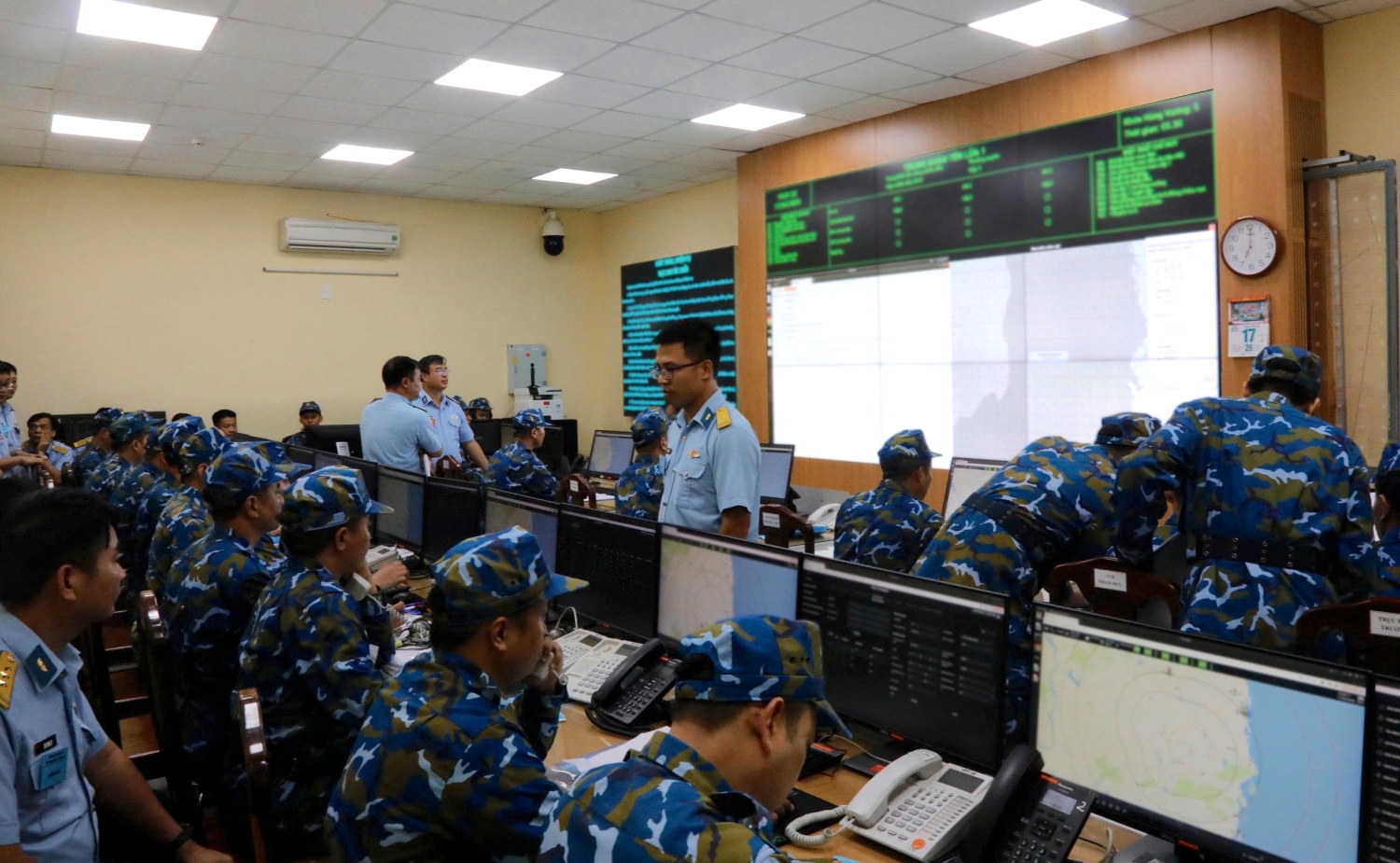
Given the situation, the Ministry of National Defense assigned Viettel Group to coordinate with the Service to research and build a 100% "Make in Vietnam" National Airspace Surveillance and Protection System. The Group boldly accepted the mission, declaring that "Viettel can do it" and committing to the Ministry to research and manufacture a new airspace management system that would fully replace foreign versions.
In 2012, when the young team of engineers at the Viettel Research and Development Institute (the predecessor of Viettel High Tech) began their research, the candid question from the Service was: "Can you actually do it?". At that time, Viettel was primarily known as a telecommunications carrier; having engineers who were good at technical tasks was one thing, but understanding the operational logic of air defense and air force warfare was a completely different challenge.
Instead of giving explanations, those young engineers chose to answer with actions. A special workflow was established: the Service presented the operational requirements, Viettel High Tech engineers proposed solutions, and both sides conducted field tests directly on the military equipment. Alongside refining the technology were days and months spent on training grounds. Inside cramped, high-temperature military hardware vehicles, they worked continuously to monitor and calibrate the system. Month-long deployments to the Truong Sa (Spratly) Islands became unforgettable experiences, where intense work pressure blended with the harsh conditions of the maritime environment.
Just as trust began to build, even tougher challenges emerged. Mr. Le Tran Su, Deputy Director of the project, vividly remembers the task of "cleaning" radar screens amidst extreme interference environments requested by the Service. He recalled: “We split into two teams: one stayed on the field to collect data, while the other worked round-the-clock in the lab to fine-tune the algorithms. For 30 consecutive days and nights of 'living and sleeping with interference,' the team worked tirelessly to isolate the real targets.” This success marked a vital breakthrough for the Air Force, Air Defense Command and Control System.
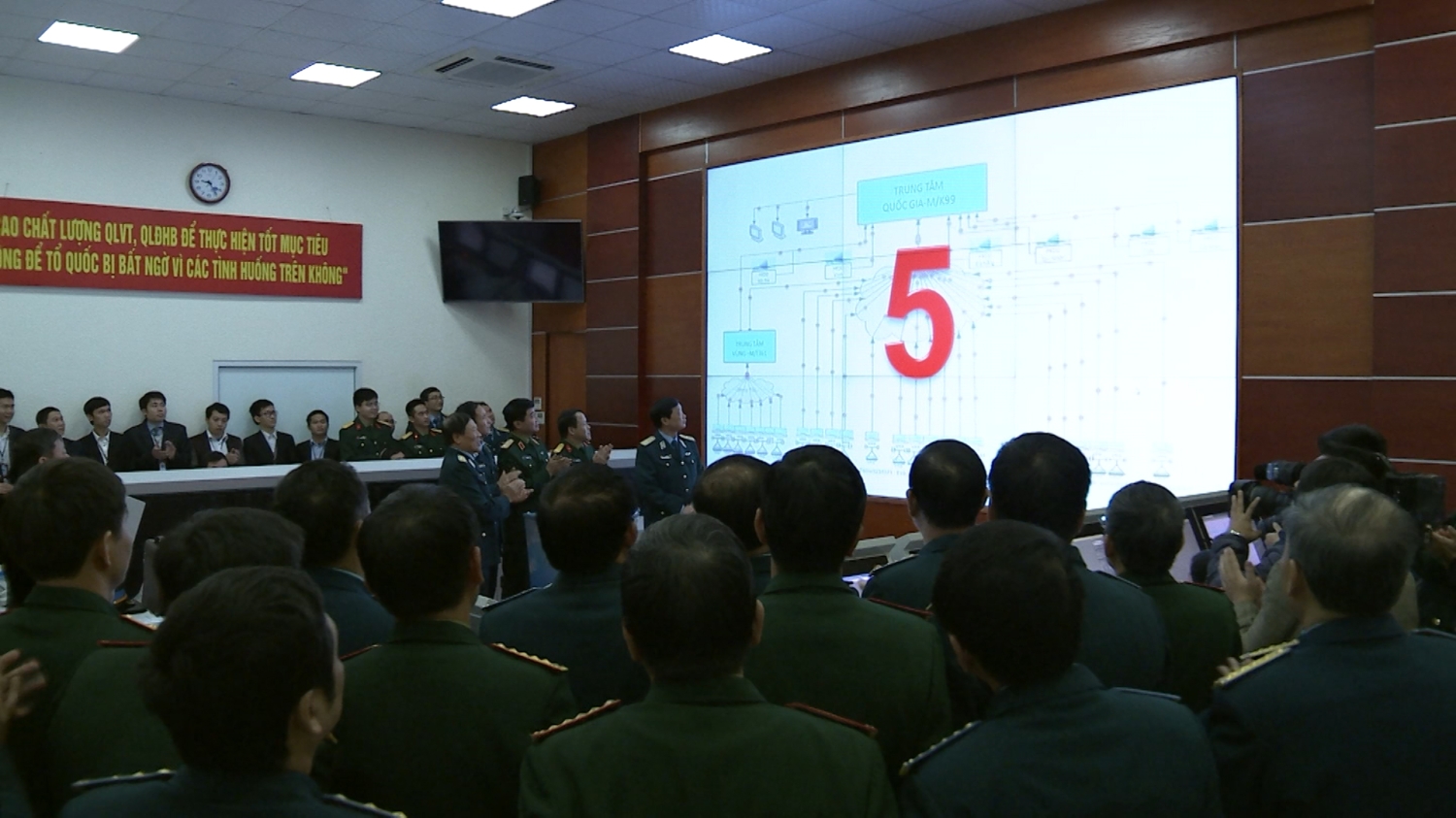
On November 14, 2016, the Air Force, Air Defense Command and Control System 1 officially went operational. Its capability to simultaneously handle up to 2,000 real-time targets not only enhanced technical capacity but also marked a fundamental shift in how airspace situations were collected, processed, communicated, and alerted, effectively serving Air Defense - Air Force operations.
Once the capability to "see" the sky was established with the Air Force, Air Defense Command and Control System 1, the next requirement was to ensure the system did not just display data but could also automatically assess situations. This would assist commanders in decision-making, executing command, and controlling forces and hardware in real time with high accuracy, ensuring no operational windows were missed.
From the 'Eyes' to the 'Brain' Protecting the Skies
Starting in 2017, Viettel High Tech collaborated with the Air Defense - Air Force Service to research the Air Force, Air Defense Command and Control System 2. If the Air Force, Air Defense Command and Control System 1 played the role of the "eyes," the Air Force, Air Defense Command and Control System 2 began taking over the functions of the "brain," where data was not just collected but analyzed, evaluated, and transformed into concrete tactical plans.
Compared to the previous stage, the complexity of the problem increased significantly. Mr. Nguyen Dinh Viet, Deputy Director of the Command and Control Center, shared that the system had to simultaneously process massive volumes of data from various reconnaissance sources within a very short timeframe, performing data fusion, filtering interference, calculating errors, and distinguishing real targets from decoys. On this foundation, the Air Force, Air Defense Command and Control System 2 gradually integrated advanced algorithms, including modern data processing methods and artificial intelligence, to assist commanders in assessing the battlefield situation and selecting optimal solutions. The Air Force, Air Defense Command and Control System 2 allows commanders at all levels to track the full development of situations, calculate tactics and operations, allocate forces, assign weapons, and control mission execution in a closed-loop system. Combat orders can be transmitted from the Service level down to individual units, and even directly to hardware on the field, with a latency of less than 10 seconds.
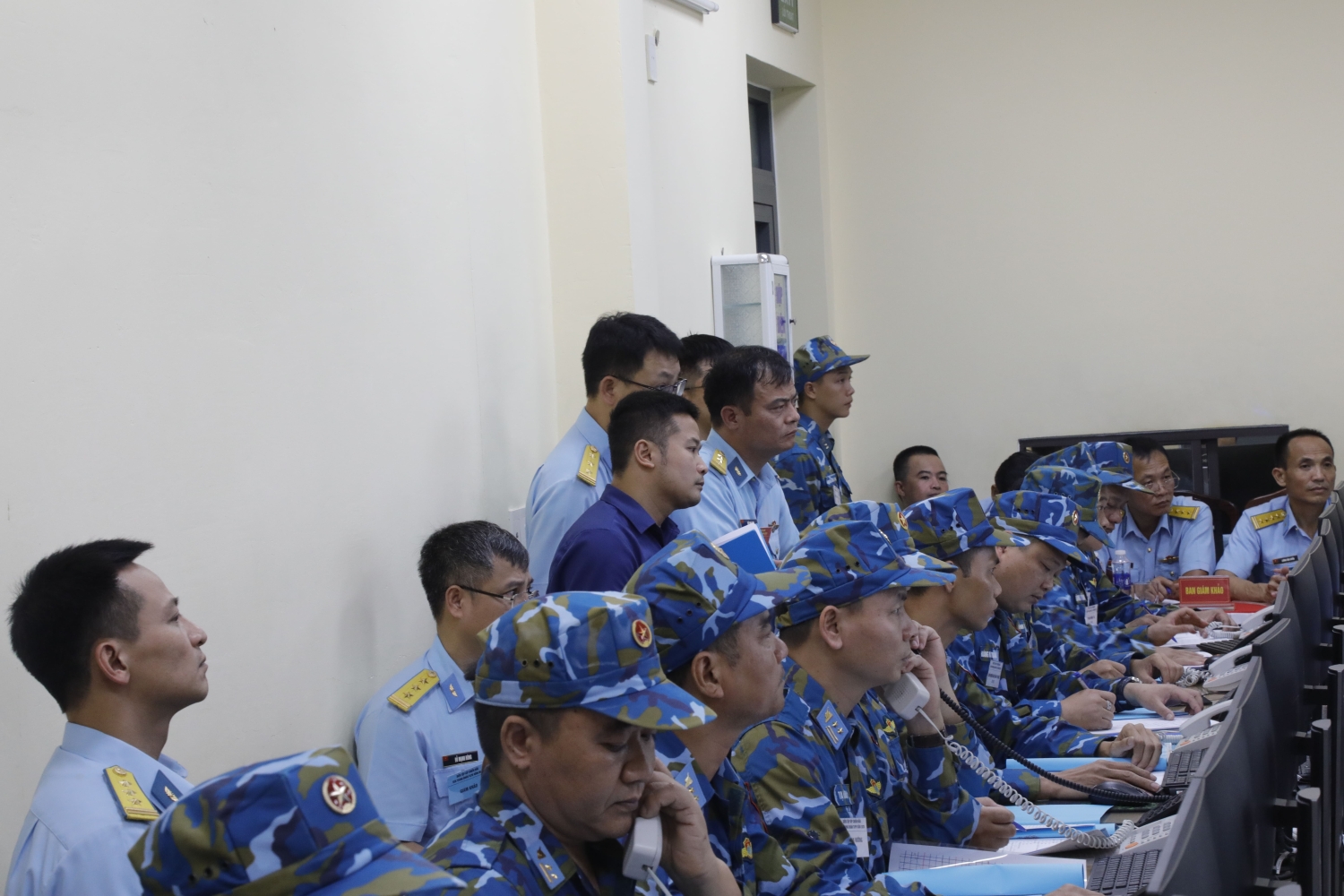
Following a research period spanning from 2017 to 2023, the Air Force, Air Defense Command and Control System 2 was deployed for regular combat readiness watch and training missions across several units within the Service. The system’s effectiveness has been clearly proven in practice. For instance, in September 2025, during a combat crew exercise at an Air Defense Missile Regiment command post involving 14 regiments, the Air Force, Air Defense Command and Control System 2 demonstrated a breakthrough improvement, shortening target processing time from 3–5 minutes down to just 5–10 seconds.
From the perspective of an end-user unit, Senior Lieutenant Colonel Nguyen Anh Thai, Commander of the 282nd Regiment, 385th Division, noted: "The system's integration helps the combat crew significantly reduce manual operations while increasing speed and accuracy in situational handling. At any given moment, our capability to control the airspace is visibly elevated."
Assessing the system as a whole, Colonel Luu Ho Anh, Deputy Standing Head of the Project Board, affirmed that the Air Force, Air Defense Command and Control System 2 not only met but exceeded the Service’s requirements. Personnel at all levels have mastered the system, executing all operational phases on an automated platform. Colonel Luu Ho Anh also emphasized the role of the Viettel High Tech engineering team throughout the deployment: “The young, highly qualified, and enthusiastic Viettel High Tech engineers worked alongside the Service to solve operational combat challenges, build configurations, and fine-tune the system to match actual combat realities, playing a vital role in getting the Air Force, Air Defense Command and Control System 2 operational effectively.”
Looking at the bigger picture, the evolution from the Air Force, Air Defense Command and Control System 1 to the Air Force, Air Defense Command and Control System 2 represents more than just expanded functionality; it marks a transition from "information digitization" to "decision digitization"—a pivotal advancement in modernizing air defense warfare.
